
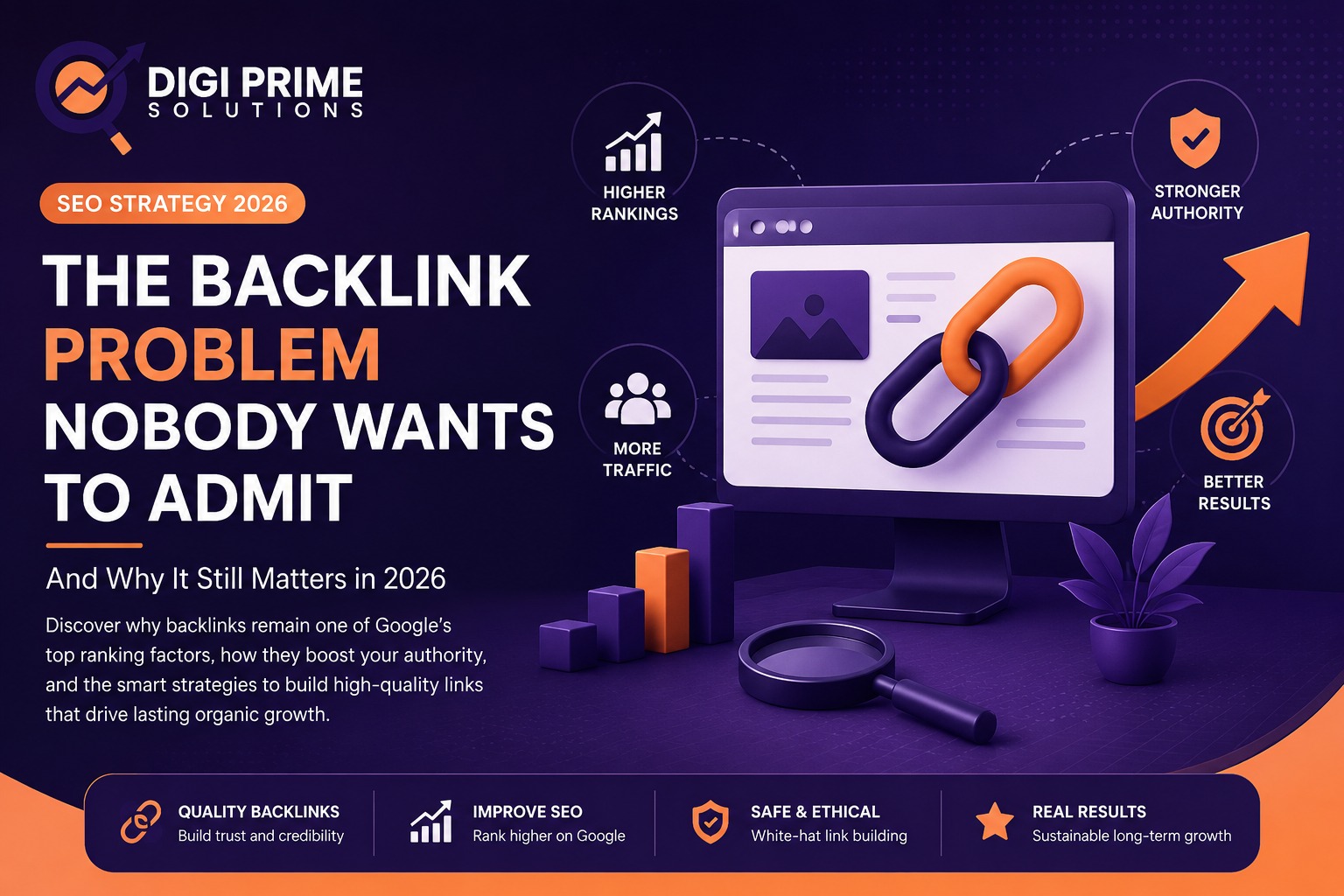
The Backlink Problem Nobody Wants to Admit (And Why It Still Matters in 2026)
Search Engine Optimization (SEO) has changed dramatically over the past few years. Artificial Intelligence, voice search, Google’s helpful content updates, and AI-powered search experiences have transformed how websites compete online. Yet despite all these changes, one ranking factor has remained incredibly powerful: high-quality backlinks.
Many businesses believe backlinks are outdated. Others assume publishing AI-generated articles is enough to rank on Google. Unfortunately, that’s one of the biggest SEO mistakes in 2026.
The reality is simple.
Great content without authority rarely ranks.
Google still relies on backlinks to determine whether your website deserves to appear on the first page. When authoritative websites link to your content, they’re essentially telling search engines that your information is trustworthy, valuable, and worth recommending.
That’s why businesses that invest in ethical, long-term link building continue to dominate competitive search results while others struggle to gain visibility.
What Are Backlinks?
A backlink is simply a hyperlink from another website pointing to your website.
Think of every backlink as a recommendation.
If respected industry websites reference your content, Google views your website as more trustworthy than websites with little or no authority.
However, modern SEO isn’t about collecting thousands of backlinks.
It’s about earning the right backlinks from relevant, authoritative websites.
Why Backlinks Still Matter in 2026
Google’s ranking algorithm uses hundreds of signals, but backlinks remain among the strongest because they’re difficult to manipulate naturally.
High-quality backlinks help Google understand:
- Your website is trustworthy.
- Your content deserves visibility.
- Other experts recommend your information.
- Your business has authority within its industry.
This leads to:
- Higher keyword rankings
- More organic traffic
- Faster indexing
- Increased domain authority
- Better brand credibility
- Higher conversion rates
How Google Evaluates Backlinks
Google doesn’t count backlinks.
It evaluates them.
Several factors influence backlink quality:
Website Authority
Links from trusted publications and established websites carry far more value than links from low-quality blogs.
Industry Relevance
A backlink from a website within your niche is much stronger than one from an unrelated industry.
Editorial Placement
Contextual links naturally placed inside valuable content pass significantly more authority than footer or sidebar links.
Natural Anchor Text
Google prefers natural anchor text rather than keyword stuffing.
Link Freshness
New editorial links continue sending positive authority signals over time.
Types of Backlinks That Improve Rankings
Editorial Links
These are earned naturally because your content provides value.
Editorial backlinks are Google’s favorite type of backlink.
Guest Post Links
Writing valuable content for reputable industry websites remains an effective way to build authority.
Digital PR Links
News mentions from journalists and media websites generate some of the strongest backlinks available.
Resource Page Links
Educational guides and useful tools often earn placements on resource pages.
HARO & Expert Contributions
Providing expert insights to journalists helps earn high-authority backlinks from trusted publications.
Link Building Strategies That Actually Work
Instead of chasing shortcuts, focus on creating content people genuinely want to reference.
Effective strategies include:
- Original industry research
- Case studies with measurable results
- Comprehensive how-to guides
- Free templates and tools
- Infographics
- Statistics pages
- Expert interviews
- Ultimate resource hubs
When your content becomes the best resource available, backlinks happen naturally.
Common Link Building Mistakes
Many websites lose rankings because they focus on quantity rather than quality.
Avoid:
- Buying backlinks
- Private Blog Networks (PBNs)
- Spam directories
- Automated software
- Irrelevant backlinks
- Exact-match anchor text abuse
- Low-quality guest posting
Google has become increasingly effective at detecting manipulative link-building tactics.
Ethical SEO always wins over the long term.
How Link Building Supports AI Search
AI-powered search engines are becoming increasingly popular.
Large Language Models often prioritize trusted, authoritative websites.
A strong backlink profile improves:
- Brand trust
- Search visibility
- AI-generated recommendations
- Knowledge graph associations
- Citation opportunities
As AI search grows, website authority becomes even more valuable.
Measuring Link Building Success
Rather than counting backlinks, measure outcomes.
Important SEO metrics include:
- Organic traffic growth
- Keyword rankings
- Referring domains
- Domain authority
- Indexed pages
- Conversion rate
- Lead generation
- Revenue from organic search
These metrics provide a much clearer picture of long-term SEO success.
Why Businesses Should Invest in Link Building
Whether you operate an eCommerce store, SaaS company, local business, agency, or blog, backlinks create sustainable growth.
Unlike paid advertising, backlinks continue generating value long after they’re earned.
Every quality backlink strengthens your website’s authority, making future content easier to rank.
This creates compounding SEO growth year after year.
Final Thoughts
SEO trends come and go.
Algorithms evolve.
Artificial Intelligence changes how people search.
But one principle remains unchanged:
Google rewards trust.
Backlinks are still one of the clearest signals of trust available.
Instead of searching for shortcuts, focus on publishing exceptional content, building genuine relationships, and earning editorial backlinks from reputable websites.
Businesses that consistently invest in ethical link building will continue to outperform competitors, attract qualified organic traffic, and build long-term authority in both traditional search engines and AI-powered search experiences.
Frequently Asked Questions
Are backlinks still important in 2026?
Yes. High-quality backlinks remain one of Google’s strongest ranking factors and play a major role in improving search visibility and domain authority.
How many backlinks do I need?
There is no fixed number. A few authoritative, relevant backlinks often outperform hundreds of low-quality links.
Can buying backlinks hurt SEO?
Yes. Purchasing spammy backlinks or participating in link schemes can result in Google penalties and long-term ranking losses.
How long does link building take?
Most websites begin seeing measurable improvements within three to six months, while significant authority growth typically takes nine to eighteen months.
What’s the best way to earn backlinks?
Create valuable, original content that other websites naturally want to reference, while combining it with ethical outreach and digital PR.
